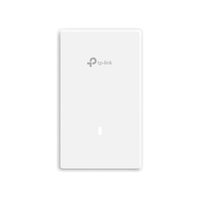
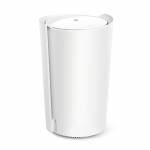
OMADA EAP775-Wall 9300 Mbit/s White Power over Ethernet (PoE) Tp-link
240,29 EUR 221,29 EUR
plus shipping and customs
Hardware/ Electronic Tp-link
Shipping charges are minimized.
103 visitors are looking at this item
Delivery to US in:
5-9 workdays (only 1 left in stock)
Sales Rank:
#1 in WLan #38 in Computer
Style:
WLan
Product No.:
2101820008
Description:
Indoor WIFI7 &bull BE93000bull 2x2x2 &bull bei 2,4 GHz bis zu 688 Mbit/s - bei 5 GHz bis zu 2882 Mbit/s - bei 6 GHz bis zu 5765 Mbit/s &bull 1x 2.5 GbE PoE at/bt &bull 44.35W (mit 25W PoE Out) &bull Betrieb: Standalone, on Premise, Cloud Managed
The Omada EAP775-Wall BE11000 Wall Plate Wi-Fi 7 Access Point from TP-Link is a high-performance, in-wall access point designed for modern enterprise and hospitality networks. As part of TP-Link's Omada ecosystem, it is intended to integrate into centralized, software-defined network management, enabling IT administrators to deploy, monitor, and manage multiple access points from a single console. Being a Wi-Fi 7 (802.11be) wall-plate device, it is optimized for high-density environments such as hotels, offices, dormitories, and apartments, where each room or unit can benefit from a dedicated, discrete access point with a clean, wall-mounted design.
From a technical perspective, the EAP775-Wall is positioned as a BE11000-class device, meaning it can deliver a combined theoretical wireless throughput of up to about 11 Gbit/s across multiple bands (triple-band Wi-Fi 7, typically 2.4 GHz plus two 5/6 GHz bands depending on regional support). Wi-Fi 7 introduces features such as wider channels, more efficient modulation, and enhanced scheduling, which help reduce latency and improve performance in environments with many simultaneous clients. As a wall plate access point, it generally offers one uplink Ethernet port (typically with PoE support for both power and data over a single cable, depending on the exact model specification) and multiple downlink Ethernet ports to connect wired devices in the room such as IP phones, smart TVs, or desktop computers. Integration with Omada SDN typically includes central configuration, automatic provisioning, captive portal support, VLANs for network segmentation, and advanced security settings like WPA3 support (where available on this model).
In terms of applications, the EAP775-Wall is ideal for hospitality deployments where each room should have reliable, high-speed Wi-Fi and possibly wired connectivity, such as hotels, serviced apartments, clinics, student housing, and modern office setups with individual rooms or small offices. The wall-plate form factor allows discreet installation that blends with standard wall fixtures, often using existing Ethernet wall boxes. This helps avoid visible ceiling installations and cable runs, making it popular where aesthetics and a clean design are important. It is also suited to small and medium businesses that want per-room or per-office access points to guarantee coverage, rather than relying on a few central ceiling-mounted devices.
The main advantages of this product include the performance headroom of Wi-Fi 7, which offers better support for high-bandwidth applications like 4K/8K video streaming, video conferencing, and cloud services, even when many clients are active. The Omada integration allows for unified management, simplified network scaling, remote troubleshooting, and the ability to roll out consistent configurations and updates across many access points. The wall-plate design makes it easy to give each room both Wi-Fi and wired ports without separate switches or visible equipment, supporting neat installations and potentially reducing total hardware.
TP-Link as a manufacturer is one of the globally recognized providers of networking products such as routers, access points, switches, and smart home devices. The company focuses on offering cost-effective, reliable network infrastructure for homes and businesses. TP-Link has publicly communicated various efforts toward more sustainable operations, including initiatives such as optimizing product design and packaging to reduce waste, increasing energy efficiency across many of its devices, and working on more environmentally conscious logistics and manufacturing processes. While specific sustainability programs or certifications for this exact model may not be detailed, TP-Link's general direction includes reducing power consumption where possible and improving the lifecycle impact of their products.
For customers, choosing a modern in-wall access point like the Omada EAP775-Wall can also contribute to more responsible IT infrastructure: centralized management helps extend the service life of hardware through firmware improvements, reduces the need for on-site interventions, and supports more efficient network designs with fewer redundant devices. Using a current-generation Wi-Fi 7 solution can mean that the network will stay relevant longer, avoiding frequent hardware replacements and thus indirectly reducing electronic waste. Combined with TP-Link's broader moves toward more efficient, environmentally aware practices, purchasing this access point is one way for businesses and organizations to align their connectivity investments with a more sustainable and future-oriented approach, while still gaining high performance, flexibility, and scalability.






 Network
18.957
- NAS/Storage 257- Power over Ethernet 73- Powerline 68- Repeater/Extender 167- Router/Switches 2.939- Video Surveillance 2.113- WLan 757- more Network 12.583Scanner 589Servers&Accessories 7.017Tablets 1.768
Network
18.957
- NAS/Storage 257- Power over Ethernet 73- Powerline 68- Repeater/Extender 167- Router/Switches 2.939- Video Surveillance 2.113- WLan 757- more Network 12.583Scanner 589Servers&Accessories 7.017Tablets 1.768