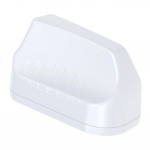
| Description: | 
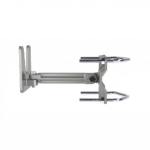
Poynting Antennenhalterung BRKT-016 GSM-Antenne zbh. BRKT-16 Universal-Guss-Schwenkhalterung Überblick BRKT-16 universell anpassbare und schwenkbare Antennenhalterung von Poynting, die fThe Poynting GSM-Antenna accessory BRKT-16 Universal Cast Swivel Bracket is a robust, universally usable mounting bracket designed to securely install and precisely align compatible Poynting Antennas GSM and cellular antennas. As a cast metal swivel bracket, it enables flexible orientation of the antenna for optimal signal reception, even in challenging installation locations. The bracket typically allows mounting on vertical or horizontal surfaces such as walls, poles or masts, and can be tilted and rotated within the mechanical limits of its design to match the desired direction of the radio link.
Technically, the BRKT-16 is engineered to provide a durable, stable mechanical base for outdoor use. The bracket is cast from sturdy metal for improved stiffness and load-bearing capacity, which helps maintain antenna alignment over time, even under wind or vibration. A swivel joint allows the antenna mount to be angled relative to the base plate, so that the antenna can be fine-tuned towards the serving base station or target sector. The design usually includes multiple mounting holes or slots to accommodate different screw patterns and to simplify installation on various surfaces. The corrosion-resistant finish (for example through painting or coating, as commonly used by Poynting) supports long-term use outdoors, alongside suitable weather-sealed antenna hardware.
In terms of applications, the BRKT-16 Universal Cast Swivel Bracket is intended for use wherever GSM or general cellular antennas from Poynting need to be mounted securely and precisely. Typical scenarios include industrial connectivity (remote monitoring, M2M and IoT gateways, RTU/PLC communication), fixed wireless access and broadband over LTE/5G routers, building and facility networking, as well as transportation, logistics and security systems that rely on stable mobile communication. The swivel function is particularly advantageous when the antenna needs to be pointed accurately due to location constraints (e.g. mounting on a side wall instead of a roof, or on a mast with multiple devices).
The key advantages of the BRKT-16 include its versatility, ease of installation and durability. One universal bracket can typically serve various antenna models within Poynting's portfolio, reducing the need to stock multiple different mounting solutions. The cast construction and mechanical robustness minimize the risk of misalignment or structural failure, helping to ensure consistent RF performance from the attached antenna. The adjustability in both tilt and rotation reduces installation time and allows installers to optimize signal levels without having to remount the antenna repeatedly. For system integrators and end users, this translates into more reliable connectivity and less maintenance.
Poynting Antennas is a specialized manufacturer of high-performance communication antennas, particularly for cellular, wireless broadband, industrial and IoT applications. The company focuses on RF engineering, innovative antenna designs and practical mounting solutions that can withstand demanding environments. Poynting typically emphasizes quality, long service life and support for professional deployments in sectors such as industry, transport, energy and telecommunications.
Wherever Poynting implements measures to improve durability, extend product lifetimes and support stable performance over many years, this also brings environmental and sustainability benefits: long-lasting mounting accessories reduce the frequency of replacements and service trips, thereby saving material, energy and transport emissions over the product life cycle. By choosing a robust universal bracket like the BRKT-16 in combination with suitable antennas, customers contribute to more efficient use of resources and to infrastructure that needs fewer interventions and less hardware turnover. In this way, the purchasing decision can support both technical reliability and a more sustainable approach to network deployment. |